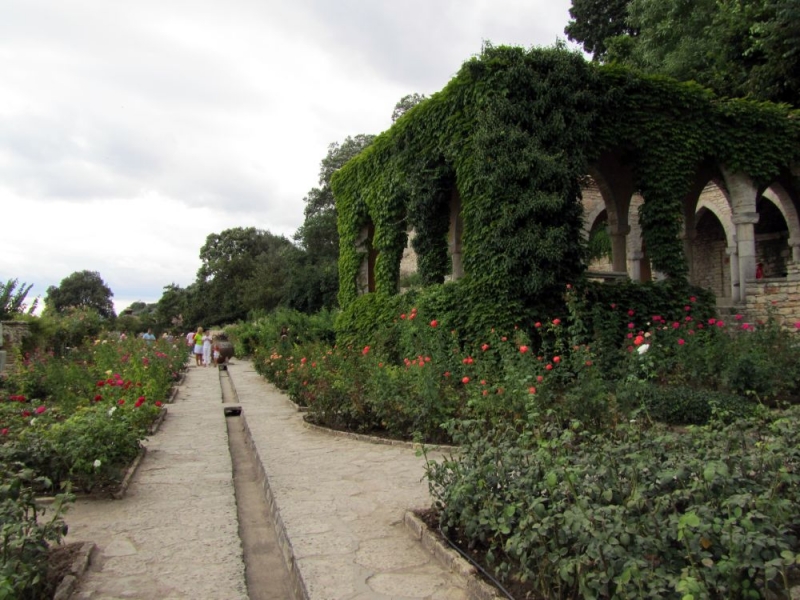
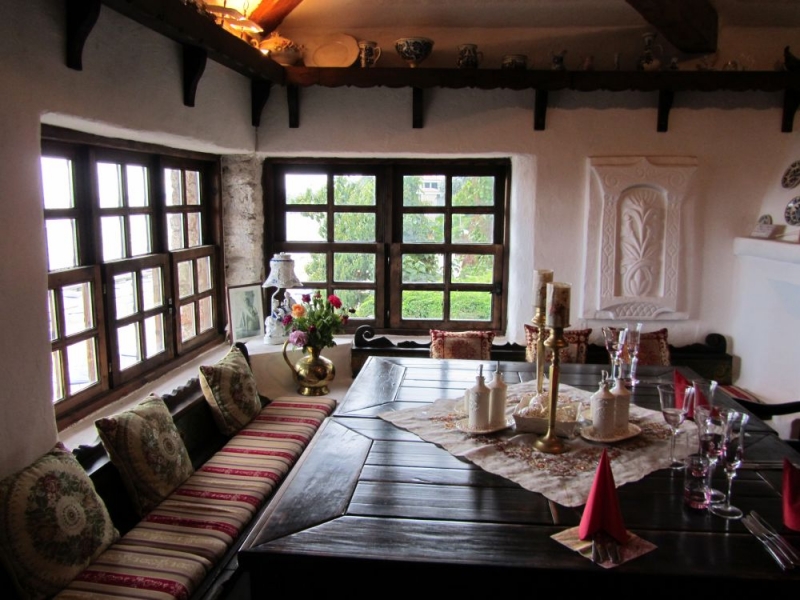
The Royal residence in Balchik was constructed between 1926 and 1937, during the Romanian rule of the region to serve as a summer residence to Queen Mariе of Romania.
The building and its surroundings are often referred to as the Quiet Nest by Queen Maria, herself, because in Balchik she used to find a peaceful sanctuary to hide from the royal vanity.
Upon return of this territory to Bulgaria, a botanical garden was created surrounding the elegant summer house of the Queen - Balchik Botanical Garden.
The park in Balchik houses more than 3,000 rare and exotic plants, fabulous flowers and the biggest cacti collection in Bulgaria.
The Royal residence in Balchik was constructed between 1926 and 1937, during the Romanian rule of the region to serve as a summer residence to Queen Mariе of Romania.
The first open-air Ethnographic Museum in Bulgaria offers a glimpse into the characteristic atmosphere from the end of 18th and beginning of 19th century.
The museum town of Koprivshtitsa is declared historic and architectural reserve. Cradle of culture, education and literature Koprivshtitsa was the birthplace of a great number of leaders of the Bulgarian National Revival.
Carved into the vertical rock at the height of 23 m, Madara Horseman is
the only rock relief from the early Middle Ages, and for its unique
nature it is enlisted in the UNESCO World Heritage List.
Nessebar, one of the oldest settlements on the Balkans, is situated on a rocky Black Sea peninsula. The town was first mentioned by Herodotus in his chronicles describing the march of the Persian King Darius against the Scythians in 513 BC.
The monastery dates back to the 10th century. As the founder of the holly cloister is assigned the Bulgarian saint Ivan Rilski, from where its name derives. His relics are kept in solemn seclusion in the Rila Monastery.
The old name of the city of Varna was Odessos , which literally means town on water. The lively, modern Varna was first mentioned in chronicles as a settlement during the 8 century.
Veliko Tarnovo is situated at the foot of the Balkan Range Mountain, proudly staged on four hills. The town is known for being the capital of the country during the Second Bulgarian Kingdom (12 century).